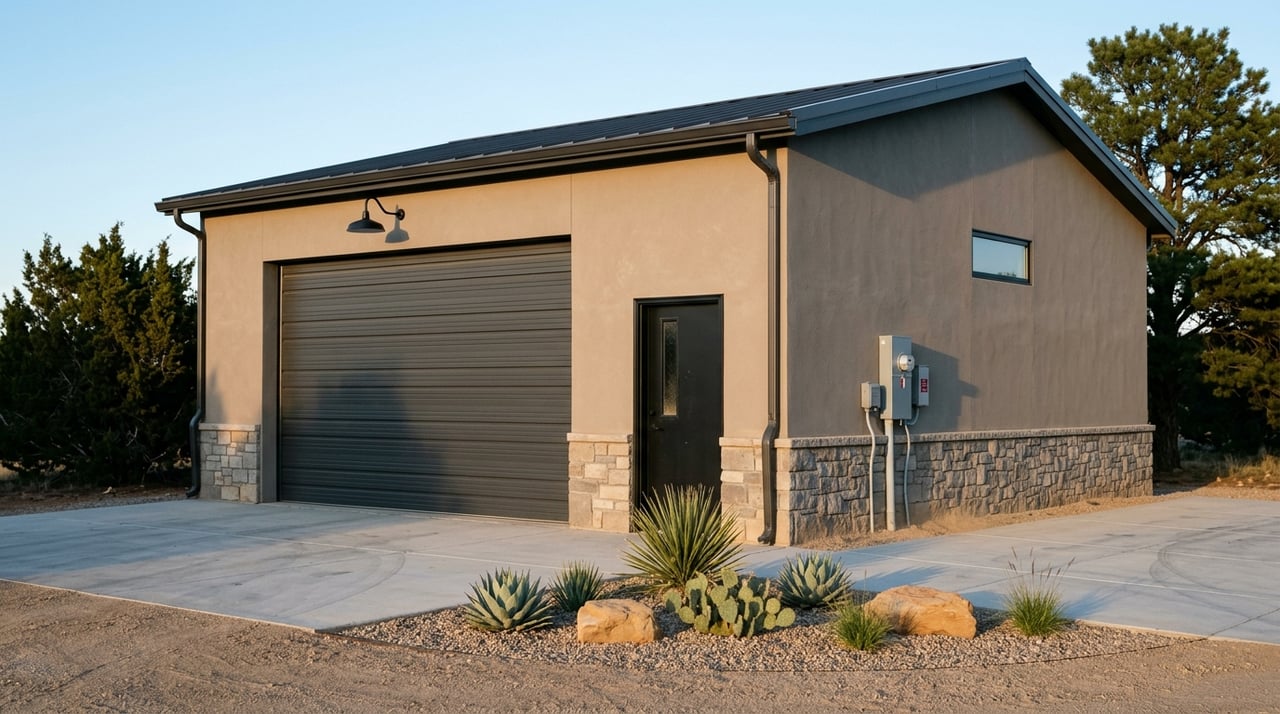
Looking at a Dewey-Humboldt property with a shop or barn can be exciting, especially if you want room for projects, equipment, animals, or extra storage. But the building itself is only part of the story. If you want to buy with confidence, you need to know how the parcel, access, utilities, and local rules all work together. Let’s dive in.
Start With the Parcel Rules
Before you focus on the size of the shop or the charm of the barn, confirm whether the property is inside Dewey-Humboldt town limits or in unincorporated Yavapai County. That one detail affects who handles permits, zoning questions, and many improvement requirements.
Inside town limits, Dewey-Humboldt Building Safety handles permit and zoning-clearance questions, and the town recommends using Yavapai GIS to review parcel information such as zoning, land use, and flood plains. In unincorporated areas, Yavapai County Development Services handles permits for buildings, grading, septic, and related work.
That matters because two similar-looking properties may not follow the same process. If you are comparing multiple homes with outbuildings, always verify the governing jurisdiction before you assume you can expand, convert, or rebuild a shop or barn the same way.
Why Size and Utilities Matter
In Dewey-Humboldt, smaller outbuildings still require attention. The town says zoning clearance is needed for sheds, animal shelters, and other structures under 400 square feet.
The town also states that a garage up to 400 square feet does not need a building permit if it has no electricity or plumbing, but it still needs zoning clearance. For buyers, that means square footage alone does not tell the whole story. A modest detached building with power, water, or a more intensive use may involve a different level of review than a simple storage structure.
Building Sequence Can Matter Too
If you plan to build a shop first and a house later, ask about timing early. Town code allows accessory uses before the principal structure only when the main project already has a construction permit and work starts within six months.
That is an important point for buyers considering vacant or partially improved land. A property that seems perfect for a future workshop setup may have limits on the order in which improvements can happen.
Check Access, Driveway, and Site Layout
A great barn or workshop is much less useful if access is difficult. Before you get attached to the building, look closely at the driveway, site layout, and how the structure sits on the lot.
Within town, design standards say parking areas, garages, carports, and accessory buildings should be behind the principal building, served by a hard-surfaced permanent driveway from the street, and not placed in the front yard. So access is not just a convenience issue. It can also affect code compliance.
Look Beyond the Driveway Surface
On acreage properties, a driveway may cross drainage areas, washes, or roadside ditches. Yavapai County guidance says culvert permits are issued through Public Works along with right-of-way permits and access permits when needed.
That means a rural driveway is worth evaluating as part of the property system. You want to know not only whether you can get in and out easily, but also whether any past or future access work may need approval.
Slopes and Grading Affect Future Plans
County guidance for detached garages shows how lot conditions can change the review process. A simple plot plan may work for smaller projects on flat lots with no grading, but if the lot is sloped, disturbed, or needs grading, a more detailed site plan may be required.
If you think you may enlarge a shop, add a barn, or improve access later, pay attention to slope, cut-and-fill areas, and the amount of disturbed ground. Those factors can influence cost, timing, and feasibility.
Pay Attention to Drainage and Flood Concerns
In Dewey-Humboldt, drainage deserves a close look, especially during monsoon season. A handsome outbuilding can become a headache if runoff, erosion, or wash crossings were not well considered.
The town building code says flood-hazard areas within Dewey-Humboldt are controlled by the Yavapai County Flood Control District, and the county provides flood-hazard status reports for the incorporated community. The county is also conducting an Area Drainage Master Study for Dewey-Humboldt.
As you tour a property, look for signs of erosion, low spots, sediment buildup, and where water appears to move after heavy rain. A shop or barn may look sound on a sunny day, but drainage patterns can affect long-term usability and maintenance.
Consider Wildfire and Emergency Access
Many buyers focus on the building and overlook the road leading to it. In this part of Yavapai County, that can be a costly mistake.
County planning documents identify Dewey-Humboldt among communities at risk for wildfire and note that difficult dirt roadways can slow response and evacuation. For homes with shops or barns, especially on acreage, it is wise to check road width, turnarounds, surface condition, defensible space, and year-round emergency access.
If you expect to store equipment, trailers, or livestock supplies, think practically about how emergency vehicles would reach the property. Access should work not only on a clear afternoon, but also during storms, runoff, or fire conditions.
Evaluate the Building Itself
Once the parcel and site make sense, turn your attention to the structure. A shop or barn should be judged by more than appearance and square footage.
Dewey-Humboldt uses the 2018 International Building Code and 2018 International Residential Code with local amendments. The town’s residential design criteria list a 115 mph wind speed, an 18-inch frost line depth, and moderate-to-heavy termite conditions.
For buyers, that makes the basics especially important. Pay close attention to foundation condition, roof framing, wood condition, signs of moisture damage, and any evidence of pest issues.
Confirm Permits for Electrical and Plumbing
A detached building may look finished, but that does not always mean its systems were fully permitted and approved. Yavapai County’s plan-review criteria for residential and accessory structures can include a scaled plot plan or site plan, a floor plan, directions to the site, and a geotechnical report for new or expanded footprint projects.
The same county guidance says separate permits may be needed for access, drainage, septic, generators, alternative power systems, wind turbines, and some solar work. It also notes that electrical service of 400 amps or greater requires load calculations and a one-line diagram.
If the shop has a subpanel, welders, compressors, heavy lighting, plumbing, or space for a future bathroom, ask whether those improvements were permitted. A building that is more than a simple shell should have a paper trail that matches its actual use.
Ask About Final Inspections
County inspection guidance states that building, plumbing, mechanical, and electrical work are all subject to inspection, and every project requires a final inspection. That makes final sign-off an important due-diligence item.
If you are looking at an older workshop or barn conversion, ask direct questions. Was the electrical updated? Was plumbing added later? Was there a final inspection? Those answers can help you understand whether the structure was improved in a way that aligns with local requirements.
Match the Building to Your Intended Use
A shop or barn can mean very different things depending on how you plan to use it. Storage, vehicle work, hobby farming, livestock shelter, and home-based work all raise different questions.
The right property is not just the one with the biggest outbuilding. It is the one where the building, parcel size, zoning, access, and utilities all support your goals.
If You Want Animals, Check Parcel Size
For hobby farming or livestock inside the town framework, code allows animal-husbandry projects and sets animal counts based on parcel size. The code lists large animals such as horses at two per acre, mid-size livestock at five per acre, and poultry and similar small animals at eight per acre, with proportionately more on larger properties.
That means a barn should never be evaluated in isolation. If you want horses, goats, chickens, or similar uses, the parcel size and zoning district are just as important as the structure itself.
If You Want a Workshop, Clarify the Use
If the outbuilding will be used for work rather than simple storage, Dewey-Humboldt treats home occupations as a regulated use. Town code allows a home occupation in a primary dwelling or in an attached or detached accessory structure, including a garage, workshop, storage shed, or barn, but it must remain clearly incidental and avoid added noise, traffic, storage, employees, and signage. It also requires a permit.
Some uses that are not allowed outright may require a separate use permit, which is discretionary and time-limited. If you want a hobby workshop, that is one conversation. If you want to operate a more active business use from the building, verify the approval path before you close.
Don’t Overlook Septic and Utility Constraints
If the outbuilding has plumbing now, or you hope to add it later, septic spacing matters. County FAQ guidance lists baseline septic setbacks of 10 feet from a structure and 100 feet from a well.
That can affect whether a sink, wash bay, laundry setup, or bathroom is practical in the building. It can also influence where future additions or utility upgrades can go on the lot.
The county also notes that septic permitting begins with a site investigation, including three test holes if the county completes the investigation. On a property with a barn or shop, utility planning should always be considered alongside the building itself.
A Smart Buyer’s Checklist
When you tour Dewey-Humboldt homes with shops or barns, keep this checklist in mind:
- Confirm whether the property is inside town limits or in unincorporated Yavapai County
- Review parcel zoning, land use, and flood-related information
- Check whether the outbuilding size and utility setup match permit history
- Look at driveway surface, width, grade, and year-round access
- Watch for erosion, runoff paths, and wash crossings
- Ask about electrical, plumbing, and final inspections
- Verify septic and well spacing if plumbing is involved
- Match the outbuilding to your intended use, whether storage, animals, or workshop space
- Clarify whether any business-related use would require a permit or added approval
For more complex properties, a general home inspection may not be enough. Depending on the building and your goals, you may also want input from a surveyor, electrician, septic professional, or structural specialist.
Buying a lifestyle property in Dewey-Humboldt can be incredibly rewarding when the details line up. If you want guidance on acreage, ranch, equestrian, or workshop-friendly homes in Yavapai County, Elena Sanwick can help you evaluate the property as a whole, not just the square footage on the listing.
FAQs
What should you verify first when buying a Dewey-Humboldt home with a shop or barn?
- First, confirm whether the property is inside Dewey-Humboldt town limits or in unincorporated Yavapai County, because permits, zoning questions, and improvement rules can differ.
Do small outbuildings in Dewey-Humboldt need permits or clearance?
- In town, sheds, animal shelters, and other structures under 400 square feet still need zoning clearance, and a garage up to 400 square feet may avoid a building permit only if it has no electricity or plumbing.
What should buyers inspect around a Dewey-Humboldt barn or workshop?
- Look closely at driveway access, grading, drainage, wash crossings, erosion, and how the outbuilding is placed on the lot in relation to the main home.
Can you use a Dewey-Humboldt shop or barn for a home-based business?
- Possibly, but town code treats home occupations as a regulated use, requires a permit, and limits impacts such as noise, traffic, storage, employees, and signage.
What matters if a Dewey-Humboldt outbuilding has plumbing or electrical work?
- Buyers should ask whether electrical, plumbing, mechanical, and related work were properly permitted, inspected, and given final approval, especially if the building has a subpanel, lighting, compressors, or fixtures.
How do animal-use rules affect Dewey-Humboldt properties with barns?
- Animal-husbandry allowances scale by parcel size, so the barn alone is not enough. You need to confirm that the parcel size and zoning district support your intended animal use.
