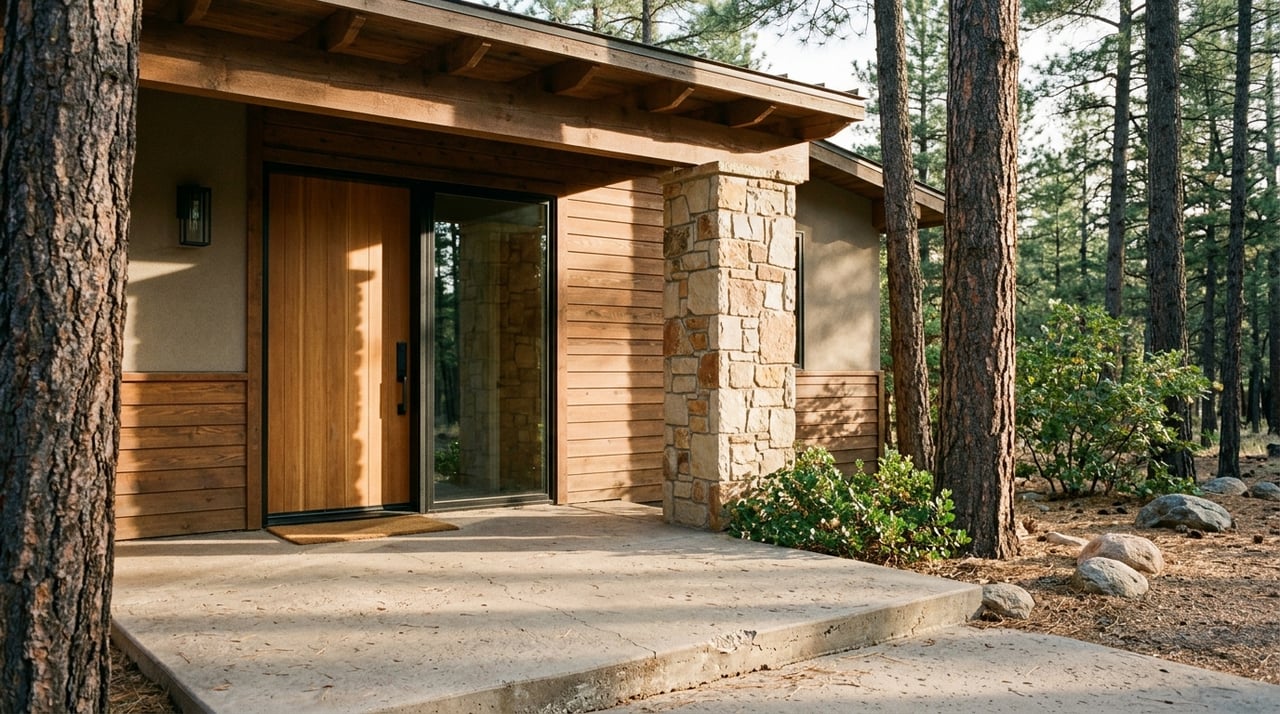
Wondering whether your Prescott dream home should sit under tall pines or closer to town conveniences? It is a smart question, because in Prescott, that choice shapes not just how your home looks and feels, but how you live in it day to day. If you are weighing privacy, maintenance, access, and long-term resale, this guide will help you compare both paths with more confidence. Let’s dive in.
The Core Prescott Tradeoff
Prescott’s land-use pattern helps explain why this decision feels so different from one property to the next. The city identifies lower-density residential areas as larger-lot, more rural-style housing, often with 2-acre minimum lots or more, while low-medium density areas are more compact single-family neighborhoods. In practical terms, that often means an in-town home gives you a more connected neighborhood pattern, while a cabin in the pines usually offers more space between homes and a more wooded setting.
That contrast is part of Prescott’s appeal. You can enjoy the area’s four-season climate in either setting, with annual mean temperature around 56.7 degrees and annual precipitation of 12.85 inches. At the same time, January mean minimum temperatures of 26.2 degrees are a reminder that winter access and cold-weather upkeep still matter here.
In-Town Homes Offer Easier Daily Living
If you want a simpler day-to-day ownership experience, an in-town home often has the edge. The City of Prescott provides water, sewer, trash, and recycling service in its service area, which includes all city limits and some nearby areas. That can make the basics of homeownership feel more predictable.
Road access is another big advantage. Public roads are city-maintained and open to everyone, while private roads are maintained by private owners, HOAs, or other private groups. If your home sits on a public road, you are less likely to be the one coordinating repairs, grading, or snow response.
That matters even more in winter. The city plows only the streets it maintains, and private-road snow removal falls to the owner or private road group. Prescott also notes that a typical 4 to 6 inch winter storm may require two days or more of plowing after snowfall stops just to restore emergency access.
Cabin Properties Bring Space and Privacy
A cabin in the pines can deliver something many buyers want most: breathing room. In Prescott, those homes are often tied to larger lots, wooded surroundings, and a more rural feel. If you picture quiet mornings, more separation from neighbors, and a property that feels tucked into the landscape, this style of home can be very appealing.
For second-home buyers and lifestyle buyers, that setting can feel especially rewarding. The tradeoff is that the home itself is only part of the equation. You also need to think about the land, access, water source, and ongoing exterior care in a way that many in-town buyers do not.
Maintenance Is Usually Higher in the Pines
The biggest difference between these two options is often maintenance. Wooded properties in Prescott typically need more hands-on exterior work, especially when it comes to vegetation management and wildfire readiness. This is not just about curb appeal. It is about safety, compliance, and protecting the property over time.
Prescott’s vegetation management plan requires defensible space around buildings, with treatment zones from 0 to 10 feet, 10 to 30 feet, and 30 to 150 feet. The city also requires that defensible space be maintained at least annually and that owners remove weeds and brush that may become a fire hazard.
That means a pine-area home may require ongoing trimming, cleanup, and site monitoring. When you tour these properties, it helps to look beyond the cabin charm and pay attention to tree density, underbrush, slope, irrigation, and how easily emergency crews could access the home.
Utilities Can Be More Complex Outside Town
One of the most important questions to ask on a cabin-style property is how the home is served. Some homes in and around Prescott are on city water, while others may rely on a private well depending on the exact location. The city notes that Prescott is within the Prescott Active Management Area, where assured water supply rules affect new subdivision development, while Yavapai County says groundwater use outside that area is largely unregulated and private domestic wells outside the area do not have a capacity restriction.
For you as a buyer, that means two homes with similar looks and price points can operate very differently. If a property has a private well, you will want to understand the system, maintenance needs, and available records. Yavapai County also notes that residents with private wells can access free water testing through Arizona State University and the county environmental unit.
Wastewater deserves the same attention. Rural and semi-rural properties are more likely to have septic systems rather than city sewer service. Arizona’s Department of Environmental Quality says a septic transfer inspection is required when a home served by septic is sold, which makes system condition and documentation especially important during a transaction.
Access and Road Ownership Matter More Than Many Buyers Expect
A beautiful setting can lose some of its shine if access is difficult. In wooded or outlying areas, road ownership is one of the first things to verify. Prescott states that owners of private roads are responsible for keeping them passable for vehicles, school buses, and emergency vehicles.
That responsibility affects cost, convenience, and resale. A privately maintained road may involve shared agreements, owner cooperation, or added seasonal work. These features are not deal-breakers, but they do add another layer of ownership that many buyers should understand before making an offer.
Resale Depends on Lifestyle Fit and Practical Details
Prescott’s market remained active in spring 2026, with the Prescott Area Association of REALTORS® reporting a median sold price of $650,000 and median days on market of 36 in April 2026. The Yavapai County Assessor reported a 2025 median home sale price of $632,000 for Prescott. That gives you a useful snapshot of a market where both convenience-driven homes and lifestyle-driven properties attract attention.
Still, not every buyer wants the same thing. In-town homes often appeal to a broader resale audience because they may offer easier utility access, city-maintained roads, and less exterior upkeep. Cabin properties can be deeply appealing, but they often draw buyers who actively want privacy, larger lots, and a more hands-on ownership style.
That does not mean one option is always a better investment than the other. In Prescott, resale often comes down to how easy the property is for the next buyer to maintain, insure, access, and understand. A well-prepared cabin property with strong access and clear system documentation can stand out, while an in-town home with simple ownership features may attract a wider pool from the start.
How to Decide Which Home Fits You
If you are choosing between these two paths, start with your daily lifestyle rather than your dream image alone. Ask yourself whether you want simplicity, or whether you are happy to take on more land and maintenance in exchange for privacy and a stronger connection to the natural setting. The right answer is personal, but the practical details should guide it.
A simple way to compare your options is to review each home through the same lens:
- Road type: public or private
- Water source: city service or private well
- Wastewater: sewer or septic
- Exterior workload: light upkeep or annual vegetation management
- Winter access: city-plowed streets or owner-managed snow removal
- Ownership style: lock-and-leave convenience or more hands-on oversight
For many buyers, an in-town home is the easier fit for a second home or part-time residence. For others, the extra work of a cabin property is worth it because the setting is the priority. The key is knowing what comes with each choice before you fall in love with the view.
A Smart Prescott Decision Starts With Good Questions
In Prescott, cabin living and in-town living can both be great choices, but they serve different goals. One usually offers more convenience and simpler ownership. The other often offers more privacy, land, and a stronger lifestyle feel, along with more systems, maintenance, and access considerations to manage.
When you evaluate homes through both a lifestyle lens and a practical lens, you put yourself in a much stronger position to buy well. If you want help comparing Prescott properties with a clear eye on access, utilities, maintenance, and resale, Elena Sanwick can help you narrow the options and make a confident move.
FAQs
Is an in-town home in Prescott usually easier to maintain?
- Yes. In-town homes often have easier access to city services, city-maintained roads, and less exterior vegetation work than cabin-style homes in wooded areas.
What should you verify before buying a cabin property in Prescott?
- You should confirm road ownership, water source, septic status, defensible-space needs, and whether the property is inside the city utility service area.
Do cabin homes in Prescott usually have private wells or septic systems?
- Some do, depending on location. Outside more connected service areas, a cabin property may have a private well, a septic system, or both.
How does winter access differ between cabin and in-town homes in Prescott?
- The City of Prescott plows only streets it maintains, while private-road snow removal is the responsibility of owners or private groups, so access can be simpler in town.
Which Prescott home type is better for a second home or lock-and-leave lifestyle?
- In many cases, an in-town home is a better fit because municipal services and city-maintained roads can reduce the number of issues you need to monitor from a distance.
