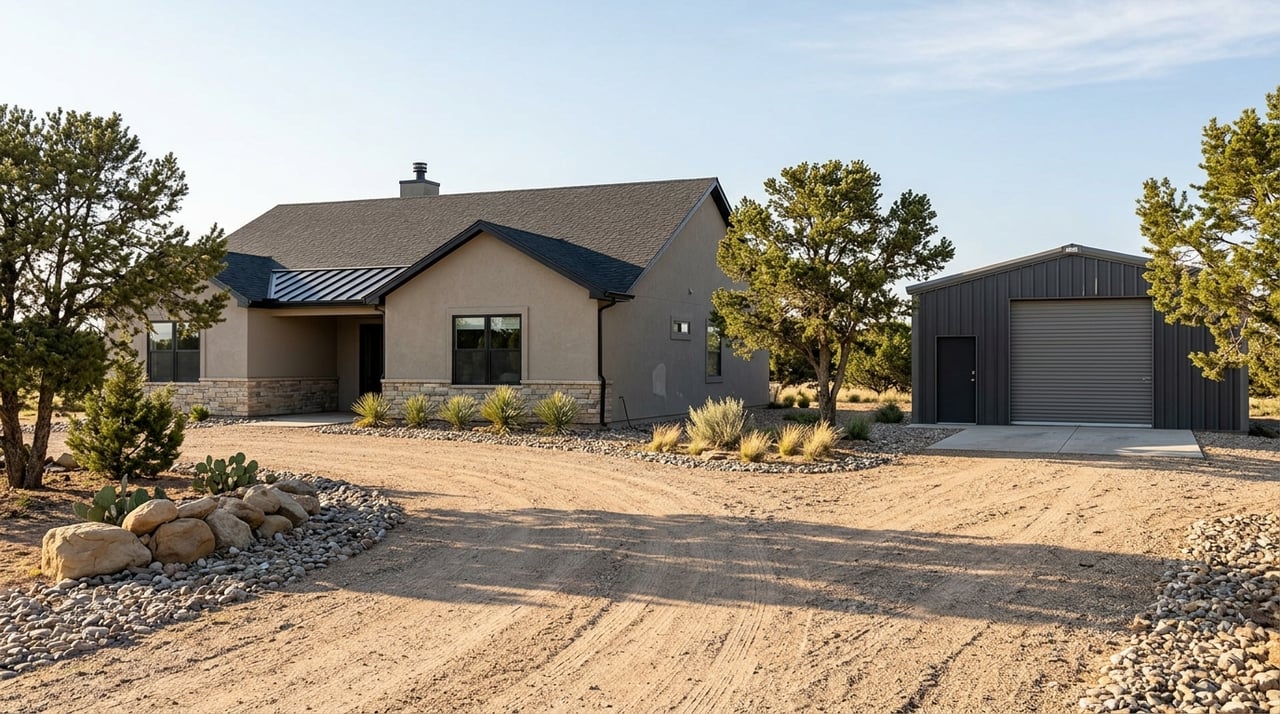
Looking for a little more space without taking on a full-scale ranch? Small acreage homes in Chino Valley can offer room for horses, outbuildings, gardens, and privacy, but the details behind the property matter just as much as the land itself. If you are shopping in the 86323 area, this guide will help you focus on the checks that matter most so you can buy with more clarity and fewer surprises. Let’s dive in.
Why small acreage needs extra due diligence
A 1 to 5 acre property often looks simple at first glance. You may see open land, a barn, a guesthouse, or space for animals and assume the property works the way it is being marketed.
In Chino Valley, that can be a costly assumption. The zoning map and the town’s Unified Development Ordinance, also called the UDO, determine what a parcel can legally do, including uses, setbacks, height limits, livestock, subdivision rules, and other site standards.
Check zoning before anything else
If you are considering a small acreage home in Chino Valley, start by confirming the exact zoning district. For many properties in the 1 to 5 acre range, the most relevant districts are AR-5, AR-4, SR-2.5, SR-2, SR-1.6, and SR-1.
That step matters because the zoning map, not the listing description, controls permitted use. The town also notes that the UDO covers subdivisions, streets and roads, landscaping, outdoor lighting, and the keeping of livestock.
What AR-5 and AR-4 allow
AR-5 is a 5-acre minimum district, and AR-4 is a 4-acre minimum district. Both are intended to preserve low-density residential and agricultural character.
In both districts, the code allows one single-family dwelling, one guesthouse, farming and agriculture, and customary accessory structures. Typical accessory structures specifically listed in the code include barns, corrals, private arenas, training tracks, coops, storage sheds, non-commercial greenhouses up to 600 square feet, and metal storage containers.
Guesthouse rules to verify
If a guesthouse is important to you, confirm the size rules early. In AR-5 and AR-4, the guesthouse allowance is capped at 1,200 square feet or 75 percent of the primary residence under roof, whichever is greater.
That means a guesthouse may be allowed, but the size and placement still need to line up with code requirements. It is always worth verifying the existing permit history if the structure is already on the property.
Livestock and hobby-farm uses
For buyers who want horses or other farm animals, small acreage can be a great fit, but only if the intended use matches the zoning. The code expressly contemplates horses and other farm animals, which is helpful for equestrian and hobby-farm buyers.
Still, you should not rely on the property feeling rural. If your planned use is more specialized, the UDO gives the zoning administrator authority to interpret uses that are not specifically listed, with appeal to the Board of Adjustment.
Confirm if the property is in town or county
The 86323 area includes both the Town of Chino Valley and nearby unincorporated Yavapai County. That distinction changes the permit path, land division rules, and some access requirements.
Before you move too far into due diligence, confirm whether the home is inside town limits or in an unincorporated county area. That one detail can affect what you can build, how access is handled, and what records you need to review.
Rules inside Chino Valley town limits
Within town limits, Chino Valley’s subdivision regulations apply. The town states that it will not issue building or development permits for property divided without meeting those rules.
If you are thinking about a future split, or simply want to confirm the parcel was created legally, this is one of the first checks to make. It can save you from buying land that looks flexible on paper but is limited in practice.
Rules in unincorporated Yavapai County
In unincorporated Yavapai County, the county requires a minor land division permit for five or fewer parcels if any resulting parcel is 10 acres or less. County building permits are also required for new buildings, additions, prefabricated structures, manufactured homes, and many other projects in unincorporated areas.
For access, the county requires an Access and Drainage Permit for a driveway or roadway that intersects a maintained county right-of-way. A separate permit is required if the driveway will be permanently surfaced with concrete, asphalt, or brick pavers.
Understand legal access and road standards
Access can be one of the biggest differences between a smooth purchase and a frustrating one. On acreage, it is not enough that you can physically drive to the house today.
You also want to know whether the access is legal, whether the frontage meets requirements, and whether the road is dedicated, improved, or privately maintained. These details can affect financing, future improvements, and day-to-day ownership.
What the town requires for land division
Chino Valley’s rules require parcels created by a division of land to meet the minimum parcel size for the zoning and have required frontage on a dedicated and improved street. If a land split would create parcels under 1 acre, it must go through subdivision.
The town also has separate rural subdivision and private-street standards. For buyers, that makes early review of road maintenance responsibilities and access easements especially important.
Verify water, septic, and sewer service
On small acreage in Chino Valley, utility due diligence should happen early. Water service, septic records, and sewer availability can vary from one property to the next.
The town describes water as a central planning issue and notes that water is not quite so freely available. Its water-resource program is built around conservation, drought planning, augmentation, and safe-yield goals, and the Prescott AMA includes the Town of Chino Valley.
Do not assume utility connections
The town maintains water and sewer services information along with a water and sewer locations list. Even so, you should verify service status parcel by parcel rather than assuming a small-acreage home is connected to town utilities.
A property may have a well, septic, sewer connection, or some combination of utility considerations that need to be confirmed through records. On acreage, assumptions can lead to expensive surprises later.
Septic records matter more than buyers expect
Yavapai County Environmental Services handles permitting and inspections for conventional and alternative onsite wastewater systems. Sites must be investigated to determine whether they are suitable for septic.
County guidance also says septic permit submittals need either an issued onsite wastewater permit, or a completed application with site investigation results, or proof of sewer connection. Homeowners are advised to keep septic permitting documents and plot plans because they show system components and locations.
Wells on smaller parcels
For wells, the county reviews well permit applications for referral to the Arizona Department of Water Resources on parcels 5 acres and smaller. County Environmental Services also approves water and sewer line extensions.
If you are buying with plans for future improvements, those utility details are worth reviewing before you close. They can shape what is feasible on the property over time.
Review outbuildings and permit history
Many buyers are drawn to Chino Valley acreage because of the extras. A barn, RV garage, shed, corral, greenhouse, or container can add real function, but only if it was built and placed in compliance with local rules.
This is why permit history matters. An outbuilding that looks useful during a showing may still need closer review for setbacks, engineering, location, or approval status.
What the town expects on accessory structures
The town’s residential accessory-structure checklist gives a good picture of what officials review. It calls for a site plan showing existing and proposed structures, setbacks, easements, lot dimensions, contours, utility locations, well, septic tank, and leach lines.
The checklist also notes that metal buildings and some single-story structures with bearing walls over 10 feet high, including RV garages, must be sealed by an Arizona-licensed engineer. That is an important point if a large shop or garage is part of your buying decision.
Storage containers need special attention
Chino Valley regulates shipping-container-style storage separately. The code added a distinct metal-storage-container section, and containers that existed before September 11, 2024 are grandfathered.
For buyers, that means you should verify compliance instead of assuming a container is treated the same as a standard shed or accessory building. This is a simple question that can prevent a complicated issue later.
Questions to ask before you buy
When you are comparing small acreage homes in Chino Valley, a few focused questions can tell you a lot very quickly. These questions line up closely with town and county rules and can help you sort attractive properties from truly workable ones.
- What is the exact zoning district?
- Is the access legal, recorded, and maintained?
- Is the parcel inside Chino Valley town limits or in unincorporated Yavapai County?
- What is the water source for the property?
- Is there a recorded septic permit or sewer record?
- Were the guesthouse, barn, shed, corral, arena, fences, RV garage, or storage container permitted?
- If the planned use is unusual, has the zoning administrator already weighed in?
What matters most on Chino Valley acreage
When you buy a small acreage home, the headline number of acres is only part of the story. In Chino Valley, the highest-value early checks are zoning, legal access, water source, septic records, and permit history for outbuildings.
If those items line up, you can move forward with far more confidence. If they do not, a property that looked ideal at first glance may turn out to be a poor fit for your goals.
Whether you are looking for room for horses, a hobby setup, a guesthouse, or simply more breathing room, buying well means looking past the marketing and into the property’s actual entitlement and utility path. If you want a local, detail-oriented guide as you evaluate acreage in Chino Valley, connect with Elena Sanwick.
FAQs
What zoning should you check for small acreage homes in Chino Valley?
- For many 1 to 5 acre properties, the most relevant districts are AR-5, AR-4, SR-2.5, SR-2, SR-1.6, and SR-1, but you should verify the exact zoning on the town’s map because the map, not the listing description, controls permitted use.
What can AR-5 and AR-4 properties allow in Chino Valley?
- AR-5 and AR-4 allow one single-family dwelling, one guesthouse, farming and agriculture, and customary accessory structures such as barns, corrals, private arenas, training tracks, coops, storage sheds, some greenhouses, and metal storage containers, subject to code requirements.
What should you confirm about access for acreage property in 86323?
- You should confirm whether the access is legal, whether the parcel has required frontage, whether the road is dedicated and improved if required, and whether there are private-street standards, easements, or county access permits that apply.
What utility records should you review for a small acreage home in Chino Valley?
- Review the property’s water source, verify whether town water or sewer service is available, and confirm septic permitting documents or sewer records because service status can vary from parcel to parcel.
Why do outbuilding permits matter on Chino Valley acreage?
- Permit history helps confirm whether barns, sheds, RV garages, guesthouses, corrals, or storage containers were approved and placed correctly, which can affect future use, compliance, and improvement plans.
